The Dream of Terpsichore

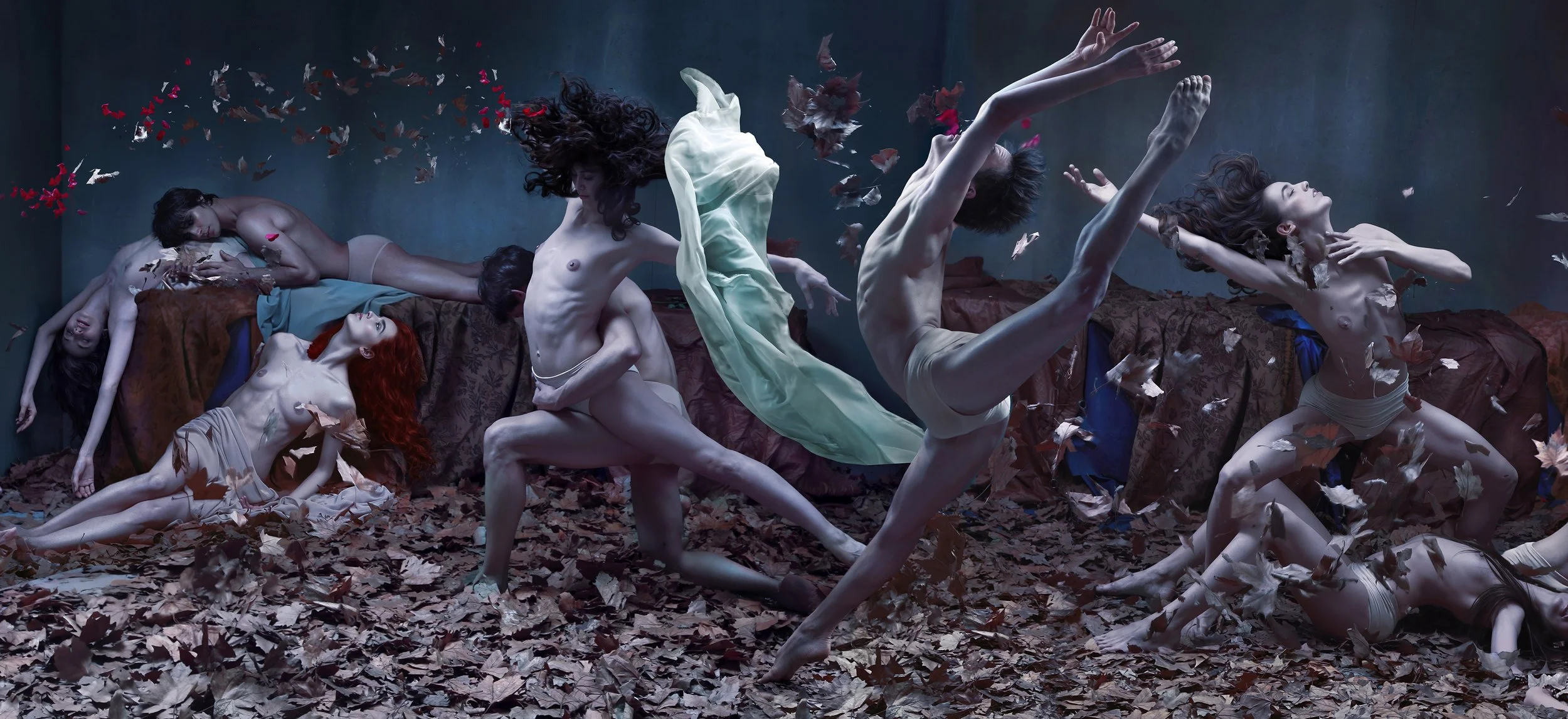
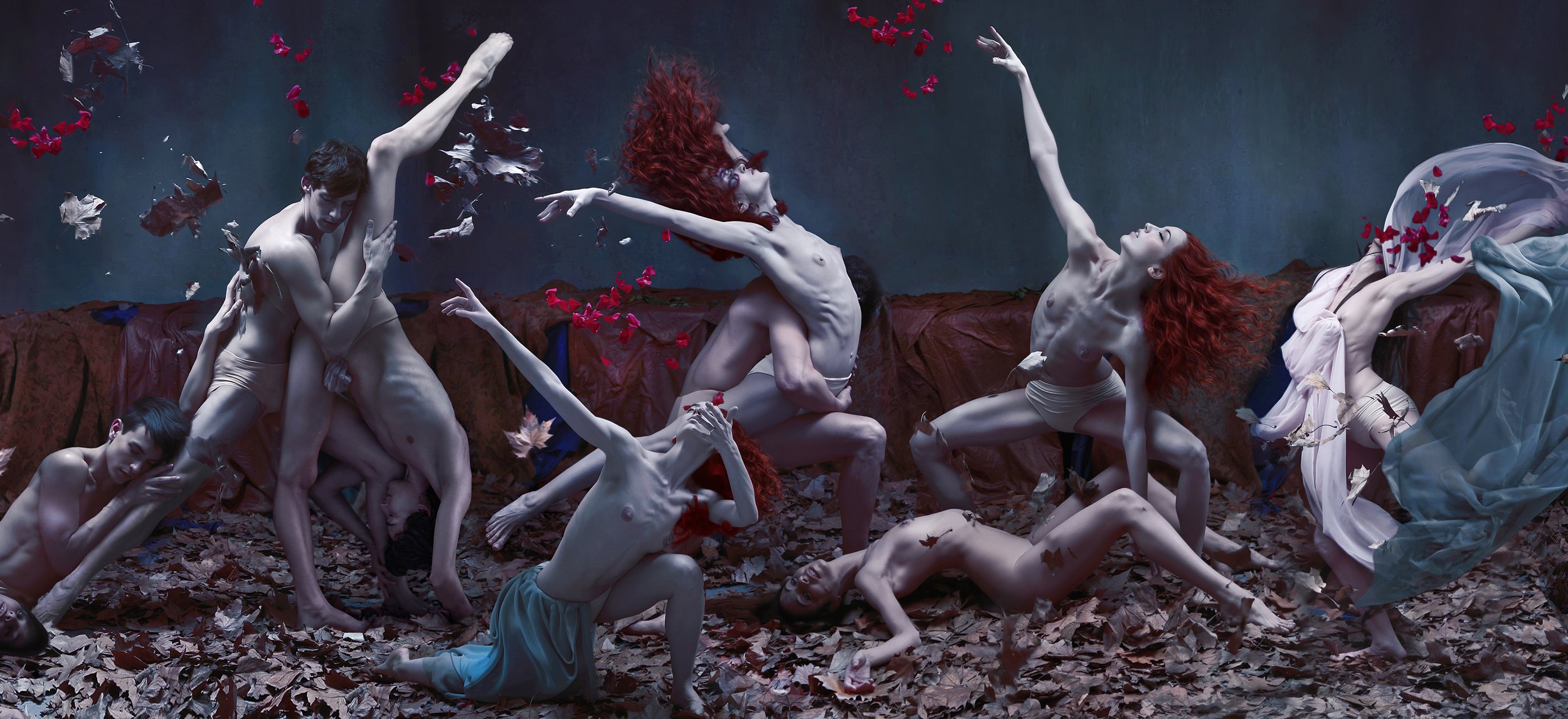
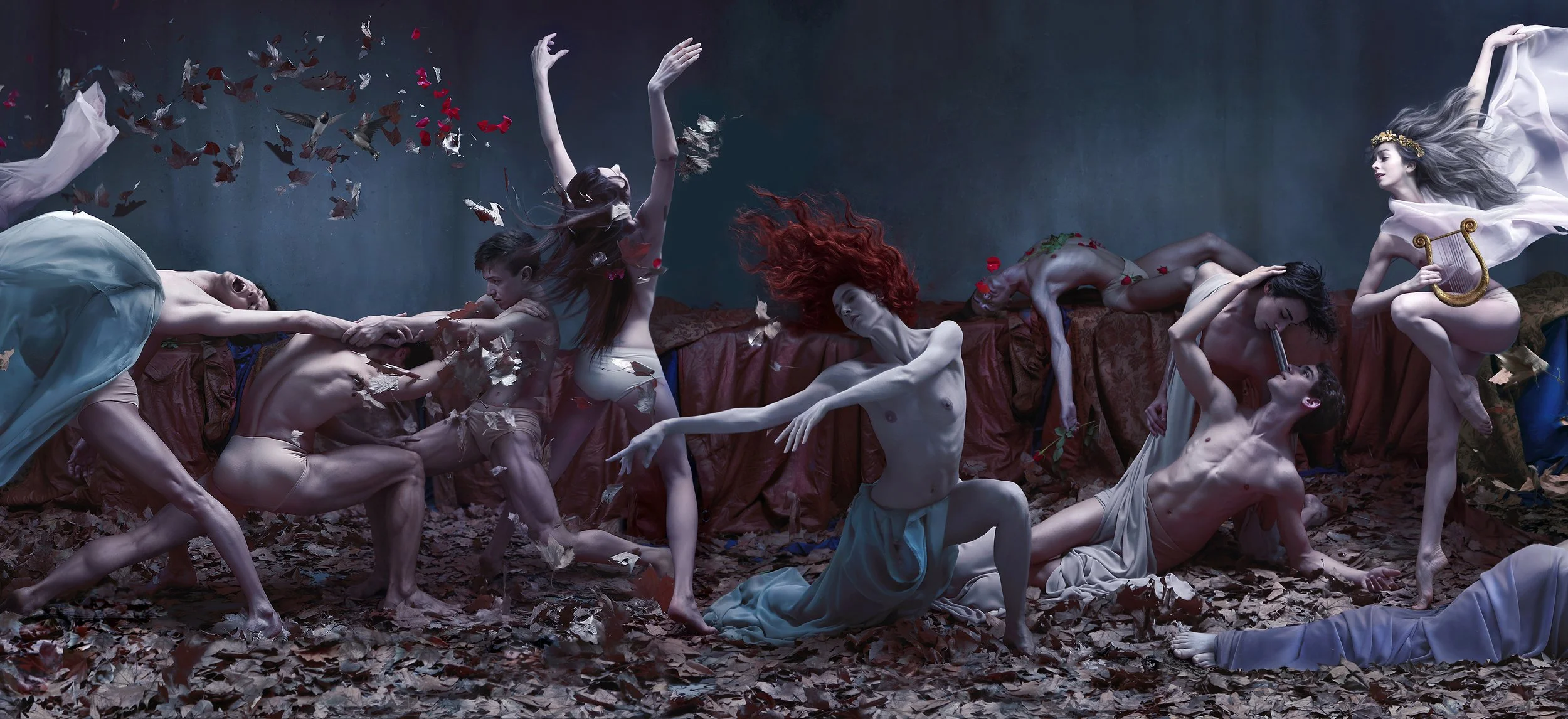
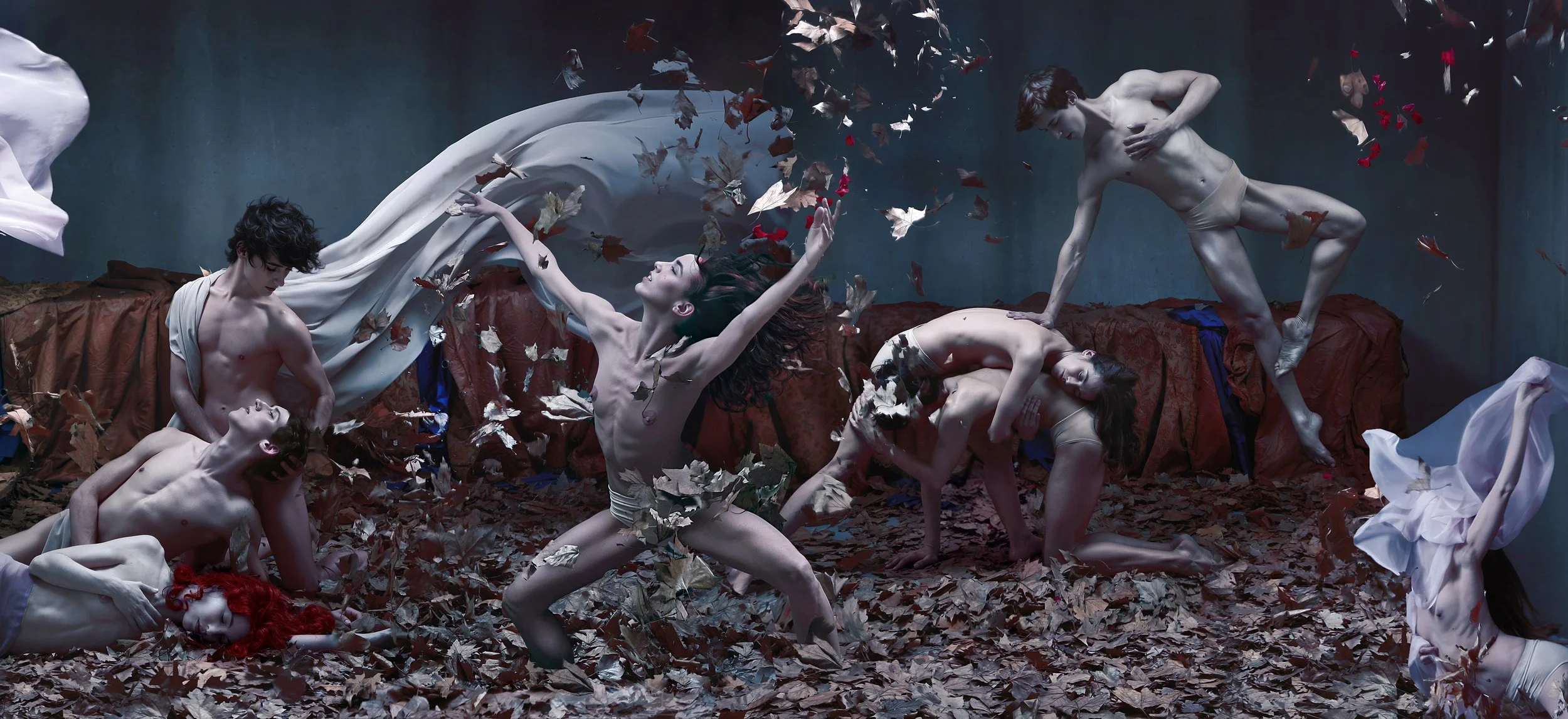
In Dream of Terpsichore, dance appears as a primal and ritual force, an impulse born from the natural warmth of the blood. Inspired by the classical muse of dance and choral poetry, the work builds an allegory suspended between the mythological and the dreamlike, where bodies seem surrendered to an inevitable movement.
The figures, caught in a continuous flow of tension, desire, and transformation, evoke ancient classical friezes and pagan celebrations, yet are permeated by a contemporary sensibility close to dreaming and the dissolution of identity. There is no concrete narrative, but rather an emotional choreography: a collective state in which the body ceases to obey reason and becomes language, impulse, and ancestral memory.
The scene functions as a suspended vision outside of time, a theatre of bodies in transit between beauty, excess, and disappearance.